In Praise of Eclecticism on II. János Pál pápa tér
In praise of eclecticism on II. János Pál pápa tér.
 Fotó: patriarchatus.hu
This article was translated from Hungarian. The Hungarian original is the authoritative version. Read the original
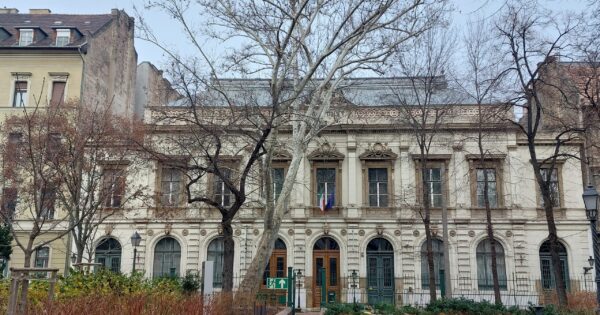
So, you’re walking around the 8th district, and there is II. János Pál pápa tér, which the old-timers still call Köztársaság tér, where the party headquarters was once besieged and where Metro Line 4 now comes up from underground. The corner where Dologház utca meets the square already carries a strong dose of Pest surrealism. The workhouse, after all, was the place where, in the 19th century, the idle, that is beggars, vagrants and prostitutes, were locked up for a little forced labour so that they would learn discipline. Later it became a hospital and an accident clinic, then came the great property wrangling after the change of regime, and the ruined pavilions were finally given to the Orthodox Patriarchate of Constantinople.
And here comes the twist that makes the unsuspecting citizen scrolling through Google Maps scratch their head: according to the map, a Polish–Hungarian Ecumenical Chapel operates at this spot.
How does Polish–Hungarian ecumenism end up with the Orthodox of Constantinople in the yard of a former workhouse? Simply because Pest eclecticism can bear anything. In the interior of the building and in the inner courtyard they created an Orthodox chapel in honour of Saint Piroska, and somehow they also squeezed in beside/below/above it this Polish–Hungarian unity named after Pope John Paul II. Behind the whole project there is a hefty dose of historical grandeur, as well as a spiritual bridge between East and West.
In reality, of course, from the street front you can see almost nothing of all this, only grim walls that have seen a lot. You should not imagine it as an ordinary church where people drop in on Sunday after the market, but as a more closed base with a symbolic and diplomatic function. This odd enclave of Józsefváros (Budapest’s 8th District), holding the eternal friendship of two nations and the Byzantine rite, is at once infinitely bizarre and perfectly Budapest.
Anyone passing by simply must see it, and anyone who lives here should know about it and perhaps be proud of our district’s eclectic little oasis.